AdverGroup 1-847-905-3000

An image of a clip board that shows the 2026 Year-End Payroll Checklist for EmployersGet payroll ready before the calendar turns

Year-end payroll preparation is more than issuing W-2 forms. Employers should reconcile payroll records, verify employee information, review tax withholding and benefit deductions, and prepare for reporting deadlines. Starting in October leaves time to correct problems before the final payroll.

2026 year-end payroll checklist

  1. Verify employee records. Confirm legal names, Social Security numbers, mailing addresses, and employment status. Use secure procedures when correcting sensitive information.
  2. Reconcile year-to-date totals. Compare wages, tips, bonuses, taxable fringe benefits, withholding, and employer taxes against payroll registers and quarterly filings.
  3. Review overtime and tip reporting. Confirm how applicable 2026 rules affect records and employee reporting. Do not assume that qualifying deductions eliminate payroll tax withholding obligations.
  4. Check benefits and deductions. Review retirement contributions, health plan deductions, taxable benefits, and annual limits applicable to each employee.
  5. Plan the final payroll. Account for holiday processing schedules, year-end bonuses, off-cycle payments, and direct-deposit lead times.
  6. Prepare tax forms. Review Forms W-2 and W-3, applicable 1099 reporting, and federal and state filing requirements. Verify current deadlines directly with the agencies before filing.
  7. Update next-year settings. Confirm new tax tables, wage bases, minimum wages, and state or local requirements for 2027.

Common year-end payroll mistakes

Late adjustments, unrecorded taxable benefits, incorrect employee details, and inconsistent quarterly totals can lead to corrections and delays. Keep a documented review trail and assign responsibility for each step.

What changed for 2026?

Employers should pay particular attention to new reporting requirements involving qualified overtime and tips, where applicable. Read our 2026 W-2 changes guide and confirm the latest instructions with the IRS W-2/W-3 instructions.

Get help with year-end payroll

ProPay HR helps employers manage payroll processing, reporting workflows, and HR administration with a responsive team that picks up the phone and gets it done. Contact ProPay HR to discuss your year-end preparation needs.

No tax on tips in 2026: tip reporting rules, qualified tips, and W-2 requirements for restaurant payroll and employersFor restaurants and other tipped businesses, “no tax on tips” has created more questions than answers, and employers are the ones responsible for getting the details right.

Like the overtime provision, “no tax on tips” is often misunderstood. It is a temporary federal income-tax deduction for eligible employees, not a tax exemption, and it does not eliminate an employer’s tip reporting or withholding duties.

Here is what employers actually need to do.

What the Tips Deduction Really Is

The One Big Beautiful Bill Act created a federal income-tax deduction for qualified tips for tax years 2025 through 2028. Eligible employees can deduct up to $25,000 in qualified tips per return.

The deduction phases out for higher earners, beginning at $150,000 of modified adjusted gross income for single filers and $300,000 for joint filers. Employees claim it on their individual tax returns.

Tips are not tax-free. They remain subject to Social Security and Medicare (FICA) taxes and to income-tax withholding, exactly as before.

Which Tips Actually Qualify

Only tips earned in occupations that customarily and regularly received tips qualify. Treasury has published a list of eligible tipped occupations, and employees must fall within one of those occupations to claim the deduction.

Just as important is what does not qualify: mandatory service charges and automatic gratuities are treated as wages, not tips. If your establishment adds an automatic charge for large parties, those amounts are regular wages subject to full withholding, and they are not eligible for the tips deduction.

What Employers Must Still Do

The employer’s core responsibilities have not gone away. Employees must still report their tips, and employers must still withhold income and payroll taxes on reported tips and pay the employer share of FICA.

In other words, day-to-day tip handling and withholding continue as usual. What’s new is the reporting.

New W-2 Reporting: Code TP and Box 14b

Beginning with the 2026 tax year, employers must separately report tip information on the Form W-2. Qualified cash tips reported to the employer go in the new Box 12, Code TP.

In addition, employers must report a tipped employee’s occupation using the new Box 14b, “Treasury Tipped Occupation Code(s),” which allows up to two codes per employee. These codes help confirm whether the employee works in an occupation eligible for the deduction.

Accurate occupation coding and tip tracking throughout 2026 are what make clean year-end reporting possible.

A Note for Illinois Restaurants and Employers

Because ProPayHR serves tipped businesses throughout Illinois, this is worth emphasizing: this is a federal deduction, and as of now, Illinois has not conformed to it.

Tip income generally remains fully subject to Illinois state income tax, even for employees who qualify for the federal deduction. Setting the right expectations with tipped staff is part of handling this change well.

Payroll and HR Expertise from ProPayHR

At ProPayHR, payroll isn’t just a task. It’s a responsibility.

Tip reporting has always been one of the more detailed parts of restaurant payroll, and the new rules add another layer. ProPayHR helps Illinois restaurants and other tipped employers determine what qualifies, apply the correct occupation codes, and report everything accurately on the 2026 W-2.

When your payroll includes tips, you need a partner who handles the details. Contact ProPayHR at 847-905-3000 or visit propayhr.com to make sure your tip reporting is ready for 2026.

No tax on overtime 2026: why overtime payroll tax still applies and what employers must report on the W-2“No tax on overtime” is one of the most misunderstood phrases in payroll right now, and the confusion can create real problems for employers who take it literally.

Despite how it sounds, “no tax on overtime” does not mean overtime is tax-free, and it does not remove any of an employer’s payroll tax responsibilities. It is a federal income-tax deduction for employees, not an exemption from payroll taxes.

Understanding that difference is essential, because the employer’s obligations have actually increased, not decreased.

What “No Tax on Overtime” Actually Is

The One Big Beautiful Bill Act created a temporary federal income-tax deduction for qualified overtime compensation, available for tax years 2025 through 2028. Eligible employees can deduct a limited amount of overtime pay when they file their individual returns.

The deduction is capped at $12,500 for single filers and $25,000 for joint filers, and it phases out for higher earners beginning at $150,000 of modified adjusted gross income for single filers and $300,000 for joint filers.

Importantly, only the overtime premium qualifies, not the entire overtime paycheck.

Only the Overtime Premium Counts

The deduction applies to the “extra half” of time-and-a-half pay required under the Fair Labor Standards Act, meaning the amount paid above the employee’s regular rate.

Overtime paid because of a contract, collective bargaining agreement, or company policy that goes beyond what the FLSA requires generally does not qualify. This distinction is one of the biggest sources of reporting errors, and it is the employer’s job to separate qualifying premiums from everything else.

Payroll Taxes Still Apply, in Full

This is the part employees and employers cannot afford to misunderstand. Overtime pay remains fully subject to Social Security and Medicare (FICA) taxes, for both the employee and the employer.

Overtime also remains subject to federal income-tax withholding. The IRS did not change its withholding tables for this deduction, which means most employees will see the benefit when they file their return, not in their regular paychecks.

For employers, nothing about calculating, withholding, or depositing payroll taxes on overtime has changed.

What Employers Must Now Do: Track and Report

What has changed is reporting. Beginning with the 2026 tax year, employers must separately report qualified overtime compensation on the Form W-2 using new Box 12, Code TT.

To do that accurately, overtime premiums need to be identified and tracked in your payroll system throughout the year. Trying to reconstruct that information at year-end is difficult and error-prone, and incorrect W-2s can lead to penalties and corrections.

A Note for Illinois Employers

Because ProPayHR works with employers across Illinois, this point matters locally: this is a federal deduction, and as of now, Illinois has not adopted it.

That means overtime pay generally remains fully subject to Illinois state income tax, even when an employee qualifies for the federal deduction. Employees shouldn’t expect “no tax on overtime” to reduce their Illinois taxes, and employers should be prepared to explain the difference.

Payroll and HR Expertise from ProPayHR

At ProPayHR, payroll isn’t just a task. It’s a responsibility.

The “no tax on overtime” rules are a perfect example of how a simple-sounding change can create complex new responsibilities for employers. ProPayHR helps Illinois businesses across many industries sort out exactly what qualifies, configure payroll to track it, and report it correctly.

When the rules get complicated, your business needs payroll expertise it can count on. Contact ProPayHR at 847-905-3000 or visit propayhr.com to make sure your overtime reporting is handled right.

2026 W-2 changes: new Box 12 codes and Box 14b for tips and overtime reporting employers need to know before year-endIf you run a payroll, you’ll want to read this one. The 2026 Form W-2 has the biggest wage-reporting changes we’ve seen in years. The best time to get ready is now, before year-end, not in January when everyone is scrambling.

Here’s the background. On January 9, 2026, the IRS finalized the 2026 Form W-2 and added new reporting fields required by the One Big Beautiful Bill Act (OBBBA). These changes show up for the first time on the W-2s you’ll hand out in January 2027 for the 2026 tax year. That means the payroll data behind those forms is being created right now, every pay period.

If your payroll system isn’t tracking the new information yet, year-end can get a lot harder than it needs to be. We’d like to help you avoid that.

What’s New on the 2026 W-2

These updates come from two OBBBA provisions you’ve probably heard called “no tax on tips” and “no tax on overtime,” plus a new type of savings account. Your employees will claim these benefits on their own tax returns. To help them do that, the IRS added new codes and reorganized part of the form.

In short, the W-2 now asks for more detail than ever about how certain wages were earned.

Three New Box 12 Codes: TP, TT, and TA

You’ll see three new codes in Box 12:

  • Code TP is the total cash tips reported to you that may qualify for the new tips deduction.
  • Code TT is the total qualified overtime pay.
  • Code TA is employer contributions made under a Section 128 “Trump account” contribution program.

Your employees will use these numbers to figure out their deductions at tax time. They need to be accurate and match the rest of your payroll records.

Box 14 Is Now Two Boxes: 14a and 14b

Box 14 has been split in two. Box 14a, labeled “Other,” works the way Box 14 always has. It’s where you report items like state disability insurance, union dues, or educational assistance.

Box 14b is new. It’s labeled “Treasury Tipped Occupation Code(s).” You’ll use it to report up to two codes that identify a tipped employee’s occupation. These codes show whether the employee’s job qualifies for the tips deduction.

Why 2026 Is Different from 2025

We hear a lot of questions about timing, and it’s easy to see why. The 2025 W-2 didn’t have any of these new boxes or codes. For 2025, the IRS gave employers transition relief and didn’t require qualified tips or overtime to be reported separately on the W-2.

That relief ends with the 2026 tax year. The new codes and occupation reporting are now a standard part of the W-2, so getting them right is part of your year-end compliance.

What This Means for Your Year-End Payroll

Clean year-end reporting starts long before December. To be ready, you need to capture the right data all year long:

  • Identify qualified overtime premiums.
  • Track reported tips.
  • Assign the correct occupation codes to tipped employees.

Mistakes cost money. Missing or incorrect W-2 information can bring penalties of hundreds of dollars per form. Fixing errors after the fact also takes far more time than getting it right the first time.

So our advice is simple: check your payroll setup now, while there’s still time left in the year, so you can produce clean, accurate 2026 W-2s.

We’re Here to Help

At ProPayHR, payroll reporting isn’t something we think about only in December. We take care of it all year.

We’re an Illinois-based payroll and HR partner, and we work with businesses in a wide range of industries. When rules change, like they have with the 2026 W-2, we stay on top of it so nothing gets missed when it counts.

We handle everything from everyday payroll to complex year-end reporting. That way you stay accurate and compliant, and you can keep your focus on running your business.

The 2026 W-2 changes are almost here, so let’s make sure your payroll is ready. Give us a call at 847-905-3000 or visit propayhr.com and we’ll talk through what these updates mean for you.

2026 Paid Family and Medical Leave Tax Credit: Could Your Business Qualify?Employers that provide paid family and medical leave may have a valuable federal tax opportunity to consider in 2026.

On September 23, 2026, the Internal Revenue Service highlighted significant enhancements to the Employer Credit for Paid Family and Medical Leave. Among the most important changes, the federal tax credit is now permanent, employee eligibility has been expanded for purposes of the credit, and employers have an additional way to calculate the credit.

For business owners, this raises an important question: Could your company qualify for the 2026 Paid Family and Medical Leave Tax Credit?

What Is the Employer Paid Family and Medical Leave Tax Credit?

The Employer Credit for Paid Family and Medical Leave is a federal general business tax credit available to employers that meet the applicable requirements and provide qualifying paid family and medical leave.

Unlike a tax deduction that generally reduces taxable income, a tax credit can reduce an employer’s federal tax liability, subject to the applicable tax rules and limitations.

The credit was originally enacted as a temporary provision. Changes to federal law enacted in 2025 made the Section 45S credit permanent, meaning it no longer has the scheduled expiration date that previously applied.

Who Benefits From the Paid Family and Medical Leave Tax Credit?

The federal tax credit goes to the qualifying employer, not directly to the employee.

That distinction is important.

The employer receives the potential tax benefit for providing qualifying paid family and medical leave. Employees can benefit from having access to paid leave that allows them to continue receiving income while taking qualifying time away from work.

In other words, the federal government is providing a financial incentive for qualifying employers to offer paid family and medical leave benefits.

How Much Is the 2026 Paid Family and Medical Leave Tax Credit?

Eligible employers may qualify for a general business tax credit ranging from 12.5% to 25% of qualifying wages paid to qualifying employees for up to 12 weeks of family and medical leave per taxable year.

Under the wage-based method, the credit generally begins at 12.5% when the employer provides qualifying leave pay equal to 50% of an employee’s normal wages. The credit percentage increases as the percentage of wages paid during qualifying leave increases, subject to the applicable requirements and maximum credit.

A Simple Paid Leave Tax Credit Example

Suppose an eligible employer provides qualifying paid family or medical leave to an eligible employee.

If the employer continues paying qualifying wages while that employee is on leave and meets the other requirements of Section 45S, a percentage of those qualifying wages may potentially be claimed by the employer as a federal general business tax credit.

The exact credit depends on how much of the employee’s normal wages are being replaced and other applicable requirements.

This is why accurate payroll records can become extremely important. Employers need reliable information concerning employee wages, length of service, hours worked and qualifying leave.

What Changed for the Paid Leave Tax Credit in 2026?

The 2026 changes substantially expand the usefulness of the credit for some employers.

According to the IRS, significant enhancements include:

  • The credit is now permanent.
  • Employee eligibility for purposes of the credit has been expanded. Employers may be able to claim the credit with respect to qualifying employees who have completed at least six months of service.
  • Certain part-time employees may qualify. The expanded provisions include employees who customarily work at least 20 hours per week.
  • Employers have a new premium-based method. Qualifying employers may potentially calculate the credit using certain premiums paid for qualifying paid family and medical leave insurance policies.
  • State and local paid-leave mandates can affect eligibility. Certain leave provided under state or local mandates may count toward determining eligibility for the federal credit, although amounts required under those mandates generally do not count toward calculating the federal credit itself.

Employers Can Now Have Two Ways to Claim the Credit

One of the most significant changes for 2026 is the addition of another method for calculating the credit.

Wage-Based Paid Leave Tax Credit

Under the wage-based method, the credit is based on qualifying wages an employer pays while an employee is taking qualifying family and medical leave.

Premium-Based Paid Leave Tax Credit

Under the new premium-based method, an employer may potentially calculate the credit based on qualifying premiums paid or incurred for an insurance policy that provides paid family and medical leave benefits.

The availability of these two approaches means employers should understand how their paid-leave benefits are structured before determining how the credit may apply to their organization.

What Types of Family and Medical Leave May Qualify?

Qualifying family and medical leave can include leave associated with circumstances such as:

  • The birth of a child and care for the newborn child.
  • Adoption or placement of a child for foster care.
  • An employee’s own serious health condition.
  • Caring for a spouse, child or parent with a serious health condition.
  • Certain qualifying circumstances involving a family member serving in the Armed Forces.
  • Caring for certain covered servicemembers with a serious injury or illness.

Employers should review the specific federal requirements applicable to their circumstances rather than assuming that every form of paid time off qualifies for the credit.

Paid Family Leave Tax Credit Eligibility Is Not the Same as FMLA Eligibility

This is an important distinction for employers.

The federal Family and Medical Leave Act (FMLA) generally provides eligible employees of covered employers with job-protected leave for qualifying family and medical reasons. Federal FMLA leave itself may be unpaid, although employer-provided paid leave can sometimes run concurrently with FMLA leave.

The eligibility rules governing an employee’s right to FMLA-protected leave are not necessarily the same as the rules used to determine whether an employer can claim the Section 45S tax credit.

For example, the Department of Labor states that employee eligibility for FMLA generally includes requirements involving 12 months of employment, at least 1,250 hours of service during the preceding 12 months and employment at a location where the employer has at least 50 employees within 75 miles.

By contrast, the enhanced Section 45S tax credit can apply with respect to certain qualifying employees after six months of service and includes provisions concerning certain part-time employees.

Employers should therefore avoid assuming that FMLA eligibility and eligibility for the federal paid leave tax credit are interchangeable.

How State and Local Paid Leave Laws Affect the Federal Tax Credit

Employers operating in jurisdictions with state or local paid-leave requirements have another layer to consider.

Under the enhanced federal rules, leave provided pursuant to certain state or local mandates may count toward determining whether an employer satisfies eligibility requirements for the federal credit.

However, amounts required to be paid under state or local law generally cannot be included in the calculation of the federal credit itself.

This distinction can be particularly important for employers with employees working in multiple states or municipalities.

Is the Paid Family and Medical Leave Tax Credit Really Permanent?

The word “permanent” has a specific meaning in this context.

Previous versions of the Section 45S credit had expiration dates. Federal legislation enacted in 2025 removed the scheduled termination of the credit, making it a permanent provision of the Internal Revenue Code.

That does not mean federal tax law can never change again. Congress can amend federal tax statutes through future legislation. However, the credit no longer automatically expires on a predetermined date under current law.

Why Accurate Payroll Records Matter for Employers Claiming the Credit

The enhanced credit illustrates how closely payroll, human resources, employee benefits and tax administration can be connected.

Depending on the method used and an employer’s circumstances, information involving employee wages, hours worked, length of service, leave taken and benefits can become important when evaluating eligibility and maintaining appropriate records.

That means payroll isn’t simply about getting money into an employee’s bank account every payday.

Accurate payroll data can become an important part of an employer’s broader HR, benefits and payroll infrastructure.

Should Your Business Review Its Paid Family and Medical Leave Policy?

With the expanded rules now applicable, 2026 is a good time for employers that provide paid leave to review how those benefits are structured and administered.

Questions employers may want to consider include:

  • Does our company currently provide paid family or medical leave?
  • Which employees may qualify under the current federal tax credit rules?
  • Are employee service dates and hours being tracked accurately?
  • Are qualifying leave payments clearly documented through payroll?
  • Do we use an insurance policy to provide paid family and medical leave benefits?
  • How do state or local paid-leave requirements affect our organization?
  • Do our payroll and HR systems provide the records needed to evaluate the credit?

Employers should work with their tax and legal professionals to determine whether their particular paid-leave program qualifies for the federal credit and how the applicable rules should be applied.

Payroll and HR Expertise from ProPayHR

Changes involving payroll, employee benefits, paid leave and workforce requirements can quickly become complicated, particularly when several areas of a business overlap.

That’s where experienced payroll and human resources support becomes valuable.

ProPayHR provides professional payroll and HR solutions backed by extensive industry knowledge and experience. We help businesses simplify payroll administration, maintain accurate employee and payroll information, manage HR responsibilities and keep pace with an evolving workforce environment.

Whether your company is reviewing paid-leave policies, managing payroll, administering employee information or addressing increasingly complex HR responsibilities, ProPayHR brings together payroll and human resources expertise to help businesses manage their workforce with greater confidence.

Tax credits such as the Employer Credit for Paid Family and Medical Leave also demonstrate why accurate payroll and HR administration matter. When regulations change or new opportunities become available, businesses need reliable information to understand how those changes may affect them.

For professional payroll and HR support, turn to the experienced team at ProPayHR.

This article is provided for general informational purposes and should not be considered tax or legal advice. Businesses should consult with their tax or legal professionals regarding their eligibility for tax credits and the application of federal, state and local requirements.

Government Resources and Sources

Internal Revenue Service (IRS): Employer Credit for Paid Family and Medical Leave, including the September 23, 2026 IRS announcement and current guidance regarding the enhanced Section 45S credit.

U.S. Department of Labor: Family and Medical Leave Act guidance, including employee eligibility, qualifying reasons for leave and FMLA employee protections.


National Payroll Week 2026: Why Accurate Payroll Matters for Every BusinessNational Payroll Week was observed September 7–11, 2026, recognizing the payroll professionals who help ensure employees across America are paid accurately and on time.

This year’s theme, “Every Paycheck Creates Possibility,” highlighted something businesses can sometimes take for granted: behind every paycheck is a payroll process that affects employees, employers and the overall workplace experience.

National Payroll Week may be over, but its message deserves attention throughout the year. For employers, accurate payroll is more than an administrative responsibility. It is an important part of operating a successful business and maintaining the trust of employees.

Why Accurate Payroll Matters for Your Business

For employees, payday is personal. Employees expect to receive the correct amount of pay, on time, every time.

For employers, making that happen involves much more than simply issuing a paycheck. Payroll can include calculating regular wages and overtime, processing tax withholdings, managing employee deductions and benefits, tracking paid time off, maintaining payroll records and meeting important reporting and deposit requirements.

When all of those pieces work correctly, payroll can seem almost invisible.

When payroll goes wrong, people notice immediately.

An incorrect or delayed paycheck can affect an employee who is depending on that money for housing, groceries, utilities, transportation and other financial obligations. Repeated payroll problems can also affect an employee’s confidence in the company they work for.

Reduce Payroll Errors

Payroll accuracy is important for more than employee satisfaction. Employers also rely on accurate payroll information for financial records, tax reporting, employee benefits and other business responsibilities.

An error that begins with a paycheck can potentially create additional administrative work involving payroll records, tax withholding, reporting or corrections.

That’s why an effective payroll process should focus on getting information right from the beginning rather than repeatedly correcting problems after payroll has already been processed.

Accurate payroll helps businesses maintain better records, reduce unnecessary administrative work and stay better prepared for payroll and employment-related requirements.

Accurate Payroll Helps Build Employee Trust

Companies have many ways to demonstrate that they value their employees, but one of the most fundamental is also one of the simplest: pay people accurately and on time.

Employees shouldn’t have to wonder whether their paycheck is correct. They shouldn’t routinely need to check whether their hours, overtime, deductions or other payroll information has been processed properly.

Consistent payroll helps establish confidence between employees and their employer. That reliability becomes part of the overall employee experience.

National Payroll Week provides an opportunity to recognize the professionals responsible for making that happen and to remind employers just how important a dependable payroll operation can be.

Payroll Is More Than Processing Paychecks

As businesses grow, payroll responsibilities can become increasingly complex.

Hiring additional employees, managing different pay rates, administering benefits, tracking paid time off, handling wage garnishments, maintaining employee records and keeping up with changing payroll requirements can create significant administrative responsibilities.

For companies with employees working in different locations or jurisdictions, payroll can become even more complicated.

This is why payroll should not simply be viewed as a back-office task. Payroll is an important business function that connects employees, human resources, accounting, and benefits.

Professional Payroll Services Can Help Businesses Stay Focused

Business owners and managers already have plenty demanding their attention. Spending valuable time researching payroll requirements, correcting payroll errors or managing complicated administrative processes can take attention away from running and growing the business.

Working with experienced payroll professionals can help businesses establish a more efficient and dependable payroll process while providing access to expertise when questions arise.

The goal isn’t simply to process another payroll. It is to create a payroll system that businesses and their employees can depend on.

Payroll and HR Expertise from ProPayHR

At ProPayHR, payroll isn’t just a task. It’s a responsibility.

With extensive experience in payroll and human resources, ProPayHR provides professional payroll and HR solutions designed to help businesses simplify workforce administration, maintain accurate payroll information and keep up with changing employer requirements.

From routine payroll processing to the increasingly complex responsibilities that come with managing a growing workforce, ProPayHR helps employers reduce administrative burdens and spend more time concentrating on their business.

National Payroll Week may come once a year, but accurate payroll matters every payday.

When your employees are counting on their paychecks, your business needs payroll expertise it can count on. That’s where ProPayHR can help.

ProPayHR provides payroll, human resource, and recruiting services for restaurants, bakeries, and food and beverage businesses, handling the tipped wages, high turnover, and scheduling complexity that make food service payroll difficult.

Payroll and HR Built for the Realities of Food Service

Restaurants deal with tipped employees, fluctuating hours, seasonal staffing, and constant hiring. Generic payroll solutions often break down under those conditions.

Experience With Restaurants and Bakeries

ProPayHR serves restaurants, bakeries, and food and beverage businesses of all sizes, bringing more than a decade of refined payroll and HR processes to an industry that never slows down.

From Paychecks to Policies

Beyond payroll, ProPayHR helps food service operators develop policies and procedures around pay practices, benefits, and compliance, reducing risk in one of the most heavily regulated employment sectors.

For restaurant and food service operators who want payroll and HR off their plate, ProPayHR.com is the experienced partner to call. Contact ProPayHR today for a free consultation.

2026 final paycheck deadlines for all 50 states + DC: fired vs. quit timing, PTO rules, and each state's labor department. Illinois payroll by ProPayHRFinal Paycheck Laws by State in 2026: Deadlines, PTO Payout Rules & Every State Labor Department

When an employee leaves, the clock starts — and the deadline is set by the state where they work, not by your company. Miss it and a routine offboarding turns into waiting-time penalties, doubled wages, or a wage claim. Here is what every employer needs to know for 2026, with a direct link to each state’s Department of Labor. Brought to you by ProPayHR, Illinois’ local payroll experts.

What Is a Final Paycheck — and When Is It Legally Due?

A final paycheck is the last payment an employer owes an employee who is leaving — whether they quit, were laid off, or were fired. It must cover every hour worked through the last day, plus any earned commissions, bonuses that can be calculated, and (in some states) accrued but unused vacation.

There is no single federal deadline. The federal Fair Labor Standards Act (FLSA) requires you to pay for all time worked, but it does not set a due date — it defaults to your next regular payday. That leaves the real answer to 50 separate state rules plus the District of Columbia. Two questions drive almost every deadline:

  • Did the employee quit, or did you let them go? Most states impose a shorter deadline for involuntary terminations. The logic: if you initiated the separation, you had time to prepare the check.
  • Does your state require a payout of unused PTO or vacation? A handful treat accrued vacation as earned wages that must always be paid. Most leave it to your written policy — but only if that policy is actually documented.

Not sure your offboarding meets your state’s deadline?

ProPayHR handles final pay, PTO payout, and off-cycle runs so a departure never becomes a penalty. We’ve managed payroll compliance for Illinois employers for more than a decade.

Call 847-905-3000
Request a Compliance Review

Final Paycheck Deadlines by State (2026)

The table below summarizes, for each state, how quickly a final paycheck is due when an employee is terminated versus when they resign, and whether unused PTO/vacation must be paid out. Click any state to open its official Department of Labor or wage-and-hour agency. Tight deadlines that may require an off-cycle payroll are shown in red; a Required badge means PTO payout is mandated regardless of policy.

State If Terminated (Fired / Laid Off) If Employee Quits Unused PTO / Vacation
Alabama No state law — next regular payday No state law — next regular payday Per policy
Alaska 3 working days Next payday (at least 3 days after notice) Per policy
Arizona 7 working days or next payday, whichever is sooner Next payday Per policy
Arkansas Next payday (corporations: within 7 days on request) Next payday Per policy
California Immediately (same day) 72 hours (immediately if 72+ hrs notice) Required
Colorado Immediately (24 hrs if payroll office closed) Next payday Required
Connecticut Next business day Next payday Per policy
Delaware Next payday Next payday Per policy
District of Columbia Next business day Earlier of next payday or 7 days Per policy
Florida No state law — federal next payday No state law — federal next payday Per policy
Georgia No state law — next regular payday No state law — next regular payday Per policy
Hawaii Immediately or next business day Next payday (immediately if a pay period’s notice) Per policy
Idaho Earlier of next payday or 10 days (48 hrs on written request) Same Per policy
Illinois YOUR STATE Next payday (at separation if possible) Next payday Required (earned vacation)
Indiana Next payday Next payday Per policy
Iowa Next payday Next payday Per policy
Kansas Next payday Next payday Per policy
Kentucky Next payday or within 14 days, whichever is later Same Per policy
Louisiana Earlier of next payday or 15 days Same Per policy
Maine Earlier of next payday or 2 weeks of demand Same Per policy
Maryland Next payday Next payday Per policy
Massachusetts Day of discharge Next payday (or following Saturday) Per policy*
Michigan Next payday Next payday Per policy
Minnesota Immediately (within 24 hrs of demand) Next payday (within 5 days if unscheduled) Per policy
Mississippi No state law — next regular payday No state law — next regular payday Per policy
Missouri Day of discharge (on request) No state law Per policy
Montana Immediately (next payday if written policy) Earlier of next payday or 15 days Required
Nebraska Earlier of next payday or 2 weeks Same Required
Nevada Immediately (within 3 days) Earlier of next payday or 7 days Per policy
New Hampshire Within 72 hours Next payday (72 hrs if a pay period’s notice) Per policy
New Jersey Next payday Next payday Per policy
New Mexico Within 5 days (task/piece work: 10 days) Next payday Per policy
New York Next payday Next payday Per policy
North Carolina Next payday Next payday Per policy
North Dakota Next payday Next payday Required
Ohio Earlier of next payday or 15 days Same Per policy
Oklahoma Next payday Next payday Per policy
Oregon End of next business day Immediately if 48 hrs notice; else earlier of 5 business days or next payday Per policy
Pennsylvania Next payday Next payday Per policy
Rhode Island Next payday Next payday Per policy
South Carolina Within 48 hrs or next payday (not to exceed 30 days) Same Per policy
South Dakota Next payday (may hold until property is returned) Next payday Per policy
Tennessee Later of next payday or 21 days Same Per policy
Texas Within 6 days Next payday Per policy
Utah Within 24 hours Next payday Per policy
Vermont Within 72 hours Next payday (or next Friday) Per policy
Virginia Next payday Next payday Per policy
Washington Next payday Next payday Per policy
West Virginia Next payday Next payday Per policy
Wisconsin Next payday (some cases within 24 hrs) Next payday Per policy
Wyoming Next payday Next payday Per policy

*Massachusetts and several other states treat earned vacation as wages under case law or agency guidance even where it is not listed as mandatory. When in doubt, confirm with the linked agency before withholding any accrued time. This table is a simplified 2026 summary for general private-sector employees; rules can vary by pay type, industry, and circumstance.

Illinois Final Paycheck Law: What Employers in Our State Must Know

Your Home State — ProPayHR Territory

Illinois pays on the next regular payday — and earned vacation is not optional

Under the Illinois Wage Payment and Collection Act (820 ILCS 115), a departing employee — whether they quit or are terminated — must receive their final compensation no later than the next regularly scheduled payday, and at the time of separation if it is possible to do so.

What trips up Illinois employers most is vacation. Illinois treats earned, unused vacation as wages. You cannot forfeit it at separation, and the monetary equivalent must be paid out in that final check. “Use-it-or-lose-it” policies are tightly limited, and getting the accrual math wrong is one of the most common triggers for an Illinois wage claim.

Illinois also requires final wages to be paid by the employee’s chosen method, and unpaid final wages can expose an employer to statutory damages plus the employee’s attorney fees. Verify current requirements directly with the Illinois Department of Labor.

ProPayHR is headquartered in Evanston and has spent more than a decade keeping Illinois employers — across long-term care, professional services, hospitality, manufacturing, nonprofits, and more — on the right side of the IWPCA. We build the vacation-accrual and final-pay rules into your payroll so the check is right the first time.

What Happens If You Miss the Deadline? Penalties by State

A late final paycheck is rarely just “late.” Depending on the state, the consequences escalate quickly:

  • Waiting-time penalties. California charges the employee’s full daily rate for every day wages go unpaid, up to 30 days — a single missed check can cost a month of wages.
  • Doubled or trebled wages. States such as Massachusetts and Arkansas can multiply what you owe two- or three-fold, and often add the employee’s attorney fees.
  • Per-day and flat fines. Many states layer administrative penalties on top of the wages themselves.
  • Wage claims and audits. One complaint to a state Department of Labor can open the door to a broader review of your pay practices.

Two rules keep almost everyone out of trouble: pay everything earned (wages, calculable commissions, and any required PTO), and pay it by your state’s deadline — even if that means running an off-cycle payroll.

Does Your State Require a PTO or Vacation Payout?

Only a small group of states require you to cash out accrued vacation at separation no matter what your handbook says: California, Colorado, Illinois, Montana, Nebraska, and North Dakota. Everywhere else, payout follows your written policy — which is exactly why the policy has to be clear, consistent, and correctly applied. Vague or contradictory PTO language is a frequent and avoidable source of wage disputes.

Can You Withhold a Final Paycheck for Unreturned Property?

Almost never. In most states you cannot delay or dock a final paycheck because an employee still has a laptop, uniform, or tools — South Dakota is the notable exception that allows holding pay until company property is returned. Deductions for damages, training costs, or equipment generally require the employee’s prior written consent, and mandatory deductions are limited to taxes and court-ordered garnishments. When in doubt, pay the wages on time and pursue the property separately.

Let ProPayHR run the final check — and every check before it

From Illinois vacation accruals to multi-state deadlines and off-cycle runs, we make sure departing employees are paid correctly and on time, every time. Payroll, HR, recruitment, and training for businesses of every size.

Call 847-905-3000
Get Started with ProPayHR

Legal disclaimer: This guide is provided by ProPayHR for general informational purposes and is a simplified summary of 2026 requirements. It is not legal advice, and final paycheck rules can vary based on pay type, industry, employment agreement, and individual circumstances. State laws also change. Before acting, confirm the current requirement with your state’s linked Department of Labor or qualified legal counsel. ProPayHR can help you build compliant pay practices for your specific situation.

ProPayHR — Enterprise-level payroll, HR, recruitment & training for businesses of every size.
2201 Main St., Suite A, Evanston, IL 60202 · 847-905-3000 · propayhr.com

ProPayHR team serving Rita’s Italian Ice from a truck during a client appreciation visitAt ProPayHR, connecting employees, software and service means more than providing reliable business solutions. It also means building genuine relationships with the clients, managers and employees we are proud to support.
That spirit of connection recently hit the road during the ProPayHR Client Appreciation Ice Cream Truck Tour. Our team visited clients with a Rita’s Italian Ice truck, serving refreshing frozen treats while spending some valuable face-to-face time with the people behind each organization.

Celebrating Our Payroll and Human Resource Clients

Payroll reports, compliance requirements and employee documentation are important parts of running a successful organization, but strong business relationships are still built between people. The ice cream truck tour gave our team an opportunity to step away from the usual meetings, emails and administrative responsibilities to personally thank the clients who place their trust in ProPayHR.

At each stop, employees gathered outside to enjoy Italian ice, meet members of the ProPayHR team and take a well-earned break from the workday. The truck quickly became a gathering place for conversation, laughter and team appreciation.

One of our visits was with the team at Loft Healthcare. Their employees welcomed ProPayHR and Rita’s Italian Ice of West Ridge for an afternoon treat during the summer heat. Seeing everyone enjoying the experience reminded us why personal client service remains such an important part of our company.

More Than Payroll Management and HR Consulting Services

ProPayHR serves as an extension of our clients’ internal teams. We help businesses manage the detailed responsibilities associated with professional payroll management services, including accurate payroll processing, direct deposit, tax filing, new-hire reporting, garnishment processing, data management and payroll compliance.

Our team also provides professional human resource consulting services designed to help organizations improve employee relations, workplace policies, benefits administration, performance management and compliance with changing employment regulations.

While an Italian ice truck may look quite different from payroll and HR software, the purpose behind the tour closely reflected our everyday mission: bringing people together, supporting stronger workplaces and delivering service with a personal touch.

Recruiting Services That Help Build Stronger Teams

Client appreciation also gives us an opportunity to learn more about the people and cultures that make each organization unique. That understanding is especially important when providing employee recruiting and talent acquisition services.

ProPayHR works with employers to identify qualified candidates who possess the necessary skills while also aligning with the organization’s values and workplace culture. Our recruiting professionals can assist with job postings, applicant sourcing, candidate screening, interview coordination, reference checks, offer preparation and new-hire onboarding support.

Spending time with our clients and their employees helps us better understand the teams we support and the qualities that make their workplaces successful.

Payroll and Human Resources Training for Business Teams

ProPayHR also helps organizations strengthen their internal capabilities through payroll and human resources training services. Training programs can be customized around payroll procedures, time and attendance applications, tax filing, employee management, recruiting strategies, labor-law compliance, benefits administration and performance evaluations.

Whether we are helping a client understand new software, strengthen an HR process or remain informed about changing regulations, our objective is to give their team practical knowledge that can be applied throughout the organization.

Personal Service Is at the Heart of ProPayHR

Technology can simplify payroll and human resource management, but technology alone does not create a great service experience. ProPayHR combines knowledgeable professionals, dependable software and responsive personal support to help businesses operate more efficiently.

Casual conversations during the ice cream truck tour gave us an opportunity to hear how our clients are growing, learn what their teams are working toward and better understand how ProPayHR can continue supporting their goals.

Those conversations are invaluable. They help transform a traditional service-provider relationship into a lasting business partnership.

Thank You to Our ProPayHR Clients and Their Employees

We sincerely thank every client who welcomed the ProPayHR team during our ice cream truck tour. We appreciate the time you spent with us, the photographs you shared and the enthusiasm your employees brought to each stop.

Most importantly, thank you for trusting ProPayHR with the payroll, human resources, recruiting and training responsibilities that help keep your organization moving forward.

The Italian ice may have disappeared quickly, but the relationships and memories created during the tour will last much longer. We look forward to continuing to connect employees, software and service while discovering new ways to recognize the clients who make our work possible.

Looking for Professional Payroll and HR Support?

ProPayHR provides enterprise-level payroll, human resources, recruiting and training expertise for small businesses, growing organizations and established companies. Our team can develop a customized level of support based on your workforce, operational requirements and business goals.

SCHEDULE A FREE CONSULTATION


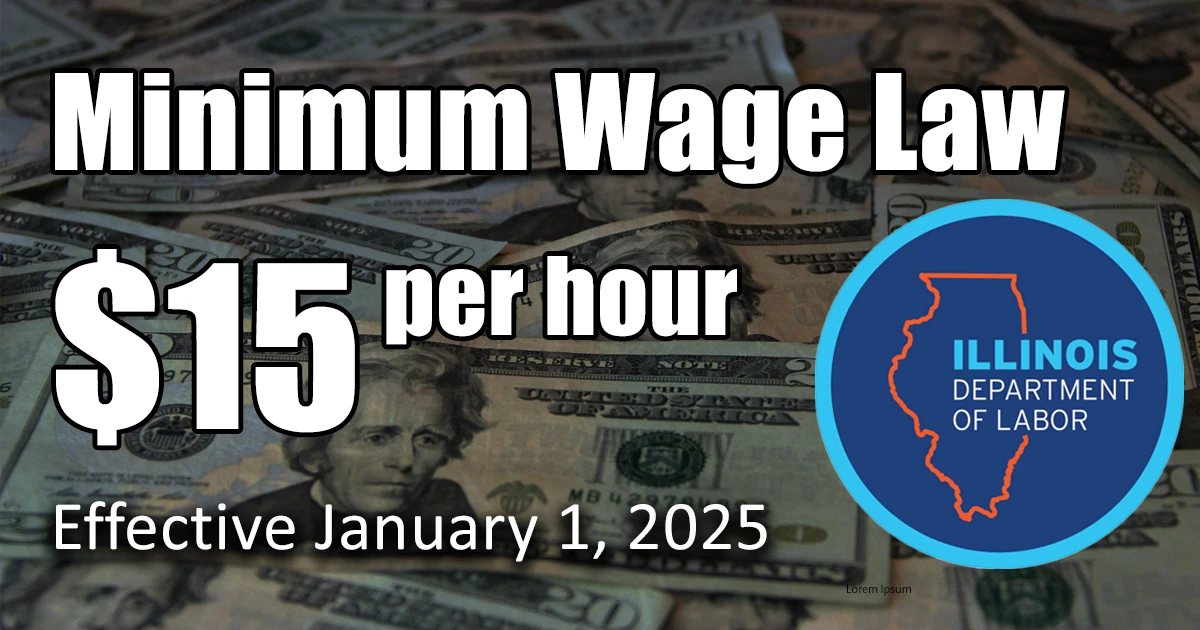
The state and Cook County minimum wage is $15 as of January 1, 2025.

On Jan. 1, 2025, the Illinois  state minimum wage increased to $15 per hour (for employers with four or more employees), $9 per hour for tipped employees, and $13 per hour for employees 17 years old and younger who work less than 650 hours in a calendar year (individuals that work 650 hours or more are entitled to the $15 per hour minimum wage).

This move marks the final hike in Governor Pritzker’s 2019 legislation scheduling minimum wage increases from $9.25 per hour in 2020 to $15 per hour in 2025.

The Cook County minimum wage also increased on Jan. 1, 2025 (for employers with four or more employees) to $15 per hour, and to $9 per hour for tipped employees, matching the state’s minimum wage.

Read the full press release here:  https://labor.illinois.gov/laws-rules/fls/minimum-wage-law.html

Accessibility Tools

Contact